Advances in Engineering Advances in Engineering features breaking research judged by Advances in Engineering advisory team to be of key importance in the Engineering field. Papers are selected from over 10,000 published each week from most peer reviewed journals.

Significance Statement
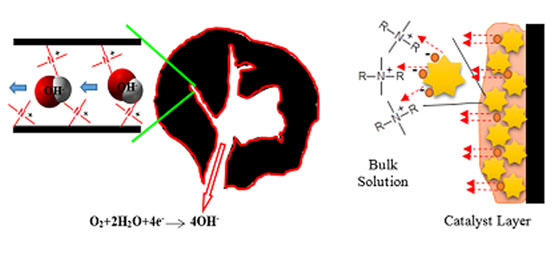
Waste to energy is one of the hottest topics in the world because too much resources are classified as “waste” including wastewater. To make full use of these resources, we need proper technologies. Microbial fuel cell (MFC) is such a green and sustainable device that can extract electrical energy directly from wastewater with simultaneous wastewater treatment. In this system, the cathode performance, especially the cathode lack of precious metal catalyst, is considered as one of the biggest bottlenecks limiting the power output. Activated carbon (AC) is demonstrated as a promising catalyst for the air-cathode of MFCs due to its high performance and low cost. Recently, a new work published in Environmental Science & Technology by Xin Wang et al. from Nankai University, described the improved cathodic performance by simple modification of quaternary ammonium (QA) on activated carbon. They found the in-situ modification of QA was more efficient than addition of anion exchange resin to decrease cathodic overpotential caused by OH- accumulation. In unbuffered NaCl solution, it effectively accelerated OH– transport in the catalyst layer, and the power density of MFCs was increased by up to 51%.
In order to improve the performance and decrease the cost of the cathode in MFCs, most of researches are focused on the increase of oxygen reduction reaction (ORR) activity by using or synthetizing of Pt substitute, such as Fe and Mn based catalysts, to decrease the activation overpotential. Unfortunately, the concentration overpotential, normally caused by the limited mass transport near the catalyst, also a key factor related to the cathode performance, seldom be emphasized in literatures. Herein, Wang et al. offers a novel and simple approach to improve mass transport inside the cathode, leading to a new insight on the concentration overpotential in AC air-cathodes. This is vital for a MFC treating real wastewaters, because the anion transport problem is much more serious in an unbuffered solution. This work provided a new and cost-effective approach for the design of AC air-cathodes in large scale MFCs for wastewater treatment and power recovery in the future.
Journal Reference
Wang X, Feng C, Ding N, Zhang Q, Li N, Li X, Zhang Y, Zhou Q.
Environ Sci Technol. 2014 ;48(7):4191-8.
MOE Key Laboratory of Pollution Processes and Environmental Criteria and Tianjin Key Laboratory of Environmental Remediation and Pollution Control, College of Environmental Science and Engineering, Nankai University , No. 94 Weijin Road, Nankai District, Tianjin 300071, China.
Abstract
Activated carbon (AC) is a promising catalyst for the air cathode of microbial fuel cells (MFCs) because of its high performance and low cost. To increase the performance of AC air cathodes, the acceleration of OH(-) transport is one of the most important methods, but it has not been widely investigated. Here we added quaternary ammonium to ACs by in situ anchoring of a quaternary ammonium/epoxide-reacting compound (QAE) or ex situ mixing with anion exchange resins in order to modify ACs from not only the external surface but also inside the pores. In 50 mM phosp hate buffer solution (PBS), the in situ anchoring of QAE was a more effective way to increase the power. The highest power density of 2781 ± 36 mW/m(2), which is 10% higher than that of the control, was obtained using QAE-anchored AC cathodes. When the medium was switched to an unbuffered NaCl solution, the increase in maximum power density (885 ± 25 mW/m(2)) was in accordance with the anion exchange capacity (0.219 mmol/g). The highest power density of the anion exchange resin-mixed air cathode was 51% higher than that of the control, indicating that anion exchange is urgently needed in real wastewaters. Excess anchoring of QAE blocked both the mesopores and micropores, causing the power output to be inhibited.