Advances in Engineering Advances in Engineering features breaking research judged by Advances in Engineering advisory team to be of key importance in the Engineering field. Papers are selected from over 10,000 published each week from most peer reviewed journals.

Colloids and Surfaces A: Physicochemical and Engineering Aspects, Volume 429, 20 July 2013, Pages 112-120.
D. Brutin
Aix-Marseille University, IUSTI UMR 7343 CNRS, 13453 Marseille, France
Abstract
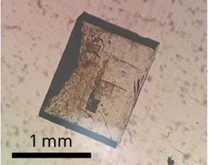
We report the pattern formation of nano-particles of iso-density water-based nanofluid drops. During the spontaneous evaporation of a droplet in air under atmospheric conditions, the solvent evaporates and nano-particles are deposited onto the substrate. Depending on the concentration, two different patterns are observed: an o-ring pattern and a continuous nano-particle flower pattern. We observe a critical concentration that corresponds to the transition between the two patterns. Humidity is controlled and modified to investigate its effect on the evaporation dynamics and on pattern formation. Surprisingly, the leading pattern is identical regardless of the evaporation time, and the evaporative mass fluxes measured are slightly higher than the expected flux, following a classical purely diffusive model for pure fluids. Two explanations are proposed: the first is that the diffusion coefficient of the nanofluid in humid air is different from that of pure water in dry air. The second is based on the experimental observation of an increase in the spreading of the nanofluid, leading to an increase in the drop perimeter, a decrease in the contact angle and thus an improvement in the evaporation rate.