Advances in Engineering Advances in Engineering features breaking research judged by Advances in Engineering advisory team to be of key importance in the Engineering field. Papers are selected from over 10,000 published each week from most peer reviewed journals.

Journal of Applied Polymer Science. Volume 128, Issue 6, pages 4110–4123, 15 June 2013.
Mohammad Washim Dewan, Mohammad Kamal Hossain, Mahesh Hosur, Shaik Jeelani.
Mechanical Engineering Department, Tuskegee University, Tuskegee, Alabama 36088 and
Materials Science and Engineering Department, Tuskegee University, Tuskegee, Alabama 36088.
Abstract
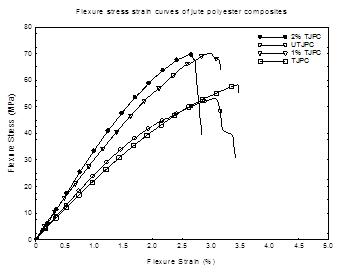
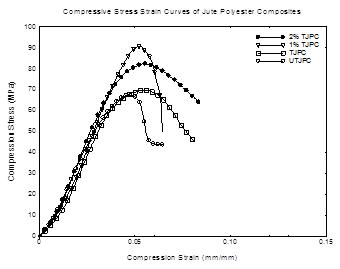
A systematic study was carried out to investigate the effect of alkali treatment and nanoclay on thermomechanical properties of jute fabric reinforced polyester composites (JPC) fabricated by the vacuum-assisted resin transfer molding (VARTM) process. Using mechanical mixing and sonication process, 1% and 2% by weight montmorillonite K10 nanoclay were dispersed into B-440 premium polyester resin to fabricate jute fabric reinforced polyester nanocomposites. The average fiber volume was determined to be around 40% and void fraction was reduced due to the surface treatment as well as nanoclay infusion in these biocomposites. Dynamic mechanical analysis (DMA) revealed enhancement of dynamic elastic/plastic responses and glass transition temperature (Tg) in treated jute polyester composites (TJPC) and nanoclay infused TJPC compared with those of untreated jute polyester composites (UTJPC). Alkali treatment and nanoclay infusion also resulted in enhancement of mechanical properties of JPC. The maximum flexural, compression, and interlaminar shear strength (ILSS) properties were found in the 1 wt % nanoclay infused TJPC. Fourier transform-infrared spectroscopy (FT-IR) revealed strong interaction between the organoclay and polyester that resulted in enhanced thermomechanical properties in the composites. Lower water absorption was also observed due to surface treatment and nanoclay infusion in the TJPC. © 2012 Wiley Periodicals, Inc. J. Appl. Polym. Sci., 2013
Copyright © 2012 Wiley Periodicals, Inc.
Additional Information:
Natural fiber reinforced composites are light weight and possess good thermal and acoustic insulating properties, higher specific properties, and higher resistance to fracture. In many applications such as secondary and tertiary structures, panels, packaging and gardening items, composites do not require strong mechanical properties. Natural fiber reinforced green composites can be used as an alternative of synthetic fiber reinforced composites in these applications. To improve interfacial strength of these fibers, various chemical processes such as silane treatment, alkali treatment, acetylation, and coupling agents are used. Alkali treatment is the easiest and most widely investigated surface treatment technique for natural fibers among them. Moreover, moisture barrier, flame resistance, thermal, and mechanical properties of polymeric composites can be improved by adding a small amount of nanoclay as filler particles. The higher surface area is one of the most promising characteristics of nanoparticles due to their ability in creating good bonding in composites. A systematic study was carried out to investigate the effect of alkali treatment and nanoclay on thermo-mechanical properties of jute fabric reinforced polyester composites (JPC) fabricated by the vacuum assisted resin transfer molding (VARTM) process. Using mechanical mixing and sonication process, 1% and 2% by weight montmorillonite K10 nanoclay were dispersed into B-440 premium polyester resin to fabricate jute fabric reinforced polyester nanocomposites. The average fiber volume was determined to be around 40% and void fraction was reduced due to the surface treatment as well as nanoclay infusion in these biocomposites. Dynamic mechanical analysis (DMA) revealed enhancement of dynamic elastic/plastic responses and glass transition temperature (Tg) in treated jute polyester composites (TJPC) and nanoclay infused TJPC compared to those of untreated jute polyester composites (UTJPC). Alkali treatment and nanoclay infusion also resulted in enhancement of mechanical properties of JPC. The maximum flexural, compression, and interlaminar shear strength (ILSS) properties were found in the 1 wt% nanoclay infused TJPC. Fourier transform infrared spectroscopy (FTIR) revealed strong interaction between the organoclay and polyester that resulted in enhanced thermo-mechanical properties in the composites. Lower water absorption was also observed due to surface treatment and nanoclay infusion in the TJPC. Low p-values (<0.05) calculated by ANOVA tests confirmed that the addition of nanoclay affected the properties of jute fiber reinforced composites in a positive way. Overall this work showed that alkali treatment and nanoclay loading can be easily used to modify the properties of traditional natural fiber reinforced composite materials for structural applications.