Advances in Engineering Advances in Engineering features breaking research judged by Advances in Engineering advisory team to be of key importance in the Engineering field. Papers are selected from over 10,000 published each week from most peer reviewed journals.

Journal of Chemical Technology and Biotechnology. Volume 88, Issue 9, pages 1663–1671, September 2013.
Jia-Long Wen (1), Bai-Liang Xue (1), Shao-Long Sun (1), Run-Cang Sun (1,2).
(1) Beijing key laboratory of lignocellulosic chemistry, Beijing Forestry University, Beijing, China AND
(2) State Key Laboratory of Pulp and Paper Engineering, South China University of Technology, Guangzhou, China.
Abstract
BACKGROUND
To achieve the goals of economically feasible auto-catalyzed organosolv pretreatments in bioethanol production, chemical conversion of the isolated lignin is needed. However, the structures and properties of lignin molecules produced after pretreatment have not been thoroughly investigated before its effective utilization.
RESULTS
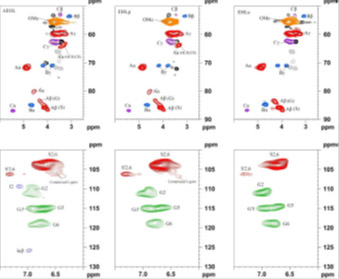
The study focused on the auto-catalyzed ethanol–water pretreatment of southwest birch, with the aim to clarify the structural transformations of birch lignin after pretreatment. Chemical structural elucidation of the isolated lignins was performed using multiple NMR methodologies (31P-, 13C- and 2D-HSQC NMR techniques). Results showed that the amount of β-O-4 linkages decreased in the order of AEOL (auto-catalyzed ethanol organosolv lignin) < EHLP (enzymatic hydrolysis lignin, pretreated) < EHLU (unpretreated). The homolytic cleavage of β-O-4 linkages resulted in an increase of free phenolic hydroxyl groups and carboxylic acids in AEOL and EHLP compared with that of EHLU. In addition, α-ethoxylation was the only modification in the auto-catalyzed ethanol organosolv pretreatment (AEOP). Moreover, the thermal stability of the lignin samples is related to its inherent and condensed structures.
CONCLUSIONS
These findings would facilitate the further utilization of lignin as starting material for developing value-added products in chemical and catalytic process. © 2013 Society of Chemical Industry.
Key words: lignin; quantitative NMR; β-O-4 linkage; thermal stability