Advances in Engineering Advances in Engineering features breaking research judged by Advances in Engineering advisory team to be of key importance in the Engineering field. Papers are selected from over 10,000 published each week from most peer reviewed journals.

Langmuir, 2014, 30 (15), pp 4396–4405 .
Jeremy L. Steinbacher , Christopher C. Landry *
Department of Chemistry, University of Vermont, Burlington, Vermont 05405, United States.
Abstract
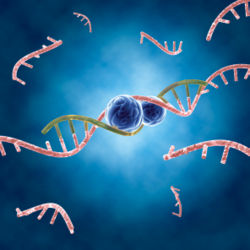
Porous silica particles are potential transfection agents for nucleic acid-based therapies because of their large specific surface areas and pore volumes and the ease with which they can be chemically modified to maximize the loading of cargo and to effect targeting in vivo. Here, we present a systematic study of the effects of pore size and pore modification on the adsorption and release of short, interfering RNA (siRNA) from a mesoporous silica particle developed in our laboratory. Using adsorption isotherms and release experiments, we found that the short polyamine diethylenetriamine was the best chemical modification for achieving both the adsorption and release of large amounts of siRNA. The degree of functionalization with diethylenetriamine caused drastic changes in the loading capacity and binding strength of siRNA to silica with relatively large pores (8 nm and larger), but the degree of functionalization had a weaker effect in narrow pores (4 nm). Multilayer adsorption could occur in materials with large pores (15 nm). Release experiments showed that intermediate pore sizes and intermediate degrees of functionalization resulted in the best compromise between maximizing loading (from strong adsorption) and maximizing release. Capillary electrophoresis and quantitative, real-time PCR demonstrated that siRNA was released intact and that these particles functioned as a transfection agent of mammalian cells in vitro.
Copyright © 2013 American Chemical Society