Advances in Engineering Advances in Engineering features breaking research judged by Advances in Engineering advisory team to be of key importance in the Engineering field. Papers are selected from over 10,000 published each week from most peer reviewed journals.

Expert Systems with Applications, Volume 40, Issue 8, 15 June 2013, Pages 2872-2888.
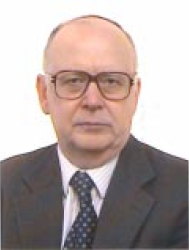
Gian Piero Zarri
Sorbonne University, LaLIC/STIH Laboratory, Maison de la Recherche, 28 rue Serpente, 75006 Paris, France
Abstract
After having recalled some well-known shortcomings linked with the Semantic Web approach to the creation of (application oriented) systems of “rules” – e.g., limited expressiveness, adoption of an Open World Assumption (OWA) paradigm, absence of variables in the original definition of OWL – this paper examines the technical solutions successfully used for implementing advanced reasoning systems according to the NKRL’s methodology. NKRL (Narrative Knowledge Representation Language) is a conceptual meta-model and a Computer Science environment expressly created to deal, in an ‘intelligent’ and complete way, with complex and content-rich non-fictional ‘narrative’ data sources. These last include corporate memory documents, news stories, normative and legal texts, medical records, surveillance videos, actuality photos for newspapers and magazines, etc. In this context, we will expound first the need for distinguishing between “plain/static” and “structured/dynamic” knowledge and for introducing appropriate (and different) knowledge representation structures for these two types of knowledge. In a structured/dynamic context, we will then show how the introduction of “functional roles” – associated with the possibility of making use of n-ary structures – allows us to build up highly ‘expressive’ rules whose “atoms” can directly represent complex situations, actions, etc. without being restricted to the use of binary clauses. In an NKRL context, “functional roles” are primitive symbols interpreted as “relations” – like “subject”, “object”, “source”, “beneficiary”, etc. – that link a semantic predicate with its arguments within an n-ary conceptual formula. Functional roles contrast then with the “semantic roles” that are equated to ordinary concepts like “student”, to be inserted into the “non-sortal” (no direct instances) branch of a traditional ontology.
Additional Information
Gian Piero Zarri has been awarded a M.Sc. in Electronic Engineering from the University of Bologna, Italy and a Ph.D. in Computer Science from the University of Paris XI-Orsay, France. After more than thirty years spent as Research Director at the French National Centre for Scientific Research (CNRS), he collaborates now with the LaLIC/STIH Laboratory of the Sorbonne University as an associated researcher. Dr. Zarri is known internationally for combining methods from knowledge-based systems and natural language processing, as well as databases and information retrieval systems. Among other things, he has defined and developed NKRL (“Narrative Knowledge Representation Language”), a knowledge representation language used in several EC-funded projects. From a technical point of view, the most important innovation of NKRL consists in the addition of an “ontology of events” (a catalogue of formalised representation of characteristic situations and events) to the usual “ontology of concepts”. Dr. Zarri’s record of research is extensive, and he is the author of more than one hundred and seventy refereed papers in the fields of Artificial Intelligence, Computational Linguistics, Information Retrieval, Global Security, etc. He has presented his work in the most prestigious Conferences of Artificial Intelligence – e.g., IJCAI, International Joint Conference on Artificial Intelligence – and Computational Linguistics – e.g., COLING, Computational Linguistics International Conference. He received, in 1977, the bronze medal of CNRS. His teaching activities have concerned, among other things and for about twenty years, a post-graduate course on “Knowledge Representation” at the “Institut National de Langues et Civilisations Orientales” (INALCO, a French “Grande Ecole”). Dr. Zarri has also been a member of the Computer Science Committee of INALCO. He is the editor of the book “Operational Expert Systems Applications in Europe” (Pergamon Press, 1991), co-author of a successful book on “Intelligent Database Systems” (Addison-Wesley/ACM Press, 2001), and author of a recent book on NKRL, “Representation and Management of Narrative Information, Theoretical Principles and Implementation” (Springer, 2009). Dr. Zarri has co-operated intensively with industry. He has acted as consultant both to large industrial groups (e.g., Thomson-CSF and Alcatel-Alsthom, France, UNILIVER, UK) and to SMEs. He has worked as evaluator of R&D projects for the European Commission, for French national agencies like ADI, DGRST and ANR, the US National Foundation, the Italian Ministry of Universities and Research (MIUR), the Dutch Jacquard (Joint Academic and Commercial Quality Research & Development) Program, the Austrian Vienna Science and Technology Fund, etc.