Advances in Engineering Advances in Engineering features breaking research judged by Advances in Engineering advisory team to be of key importance in the Engineering field. Papers are selected from over 10,000 published each week from most peer reviewed journals.

Nanoscale Research Letters 2014, 9:267.
Yingjie Liao1, Takeshi Fukuda1, Norihiko Kamata1 , Makoto Tokunaga2
1Department of Functional Materials Science, Graduate School of Science and Engineering, Saitama University, 255 Shimo-Okubo, Sakura-ku, Saitama 338-8570, Japan and
2Comprehensive Analysis Center for Science, Saitama University, 255 Shimo-Okubo, Sakura-ku, Saitama 338-8570, Japan.
Abstract
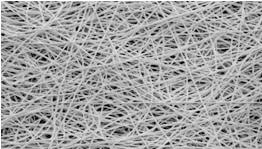
Electrospinning is a versatile technique, which can be used to generate nanofibers from a rich variety of materials. We investigate the variation of a zinc oxide (ZnO)-polyvinylpyrrolidone (PVP) composite structure in morphology by electrospinning from a series of mixture solutions of ZnO sol–gel and PVP. Calcination conditions for the crystallization of ZnO nanofibers and removal of the PVP component from the ZnO-PVP composite nanofibers were also studied. The progression of the ZnO-PVP composite structure from grains to nanofibers was observed, and ZnO-PVP nanofibers as thin as 29.9 ± 0.8 nm on average were successfully fabricated. The size of the resultant ZnO-PVP composite nanofibers was considerably affected by two parameters: the concentrations of zinc acetate and PVP in the precursor solution. The concentration of zinc acetate particularly influenced the diameter distribution of the ZnO-PVP nanofibers. The ZnO-PVP nanofibers could be subsequently converted into ZnO nanofibers of a pure wurtzite phase via calcination in air at 500°C for 2 h.