Advances in Engineering Advances in Engineering features breaking research judged by Advances in Engineering advisory team to be of key importance in the Engineering field. Papers are selected from over 10,000 published each week from most peer reviewed journals.

Nano Letters, 2014; 14 (6): 3023.
Inanc Ortac, Dmitri Simberg, Ya-san Yeh, Jian Yang, Bradley Messmer, William C. Trogler, Roger Y. Tsien, Sadik Esener.
Department of Electrical and Computer Engineering, UC San Diego Moores Cancer Center, Department of Bioengineering, Department of Chemistry and Biochemistry, Howard Hughes Medical Institute and Department of Pharmacology, and
Department of Nanoengineering, University of California, San Diego, 9500 Gilman Drive, La Jolla, California 92093, United States &
University of Colorado, Anschutz Medical Campus, Skaggs School of Pharmacy and Pharmaceutical Sciences, 12850 E. Montview Blvd. V20-4128, Aurora, Colorado 80045, United States.
ABSTRACT
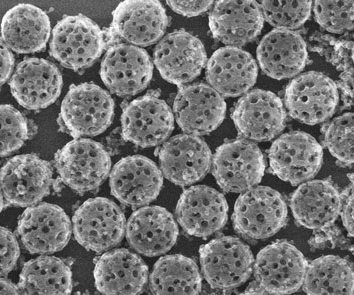
Although enzymes of nonhuman origin have been studied for a variety of therapeutic and diagnostic applications, their use has been limited by the immune responses generated against them. The described dual-porosity hollow nanoparticle platform obviates immune attack on nonhuman enzymes paving the way to in vivo applications including enzyme-prodrug therapies and enzymatic depletion of tumor nutrients. This platform is manufactured with a versatile, scalable, and robust fabrication method. It efficiently encapsulates macromolecular cargos filled through mesopores into a hollow interior, shielding them from antibodies and proteases once the mesopores are sealed with nanoporous material. The nanoporous shell allows small molecule diffusion allowing interaction with the large macromolecular payload in the hollow center. The approach has been validated in vivo using l-asparaginase to achieve l-asparagine depletion in the presence of neutralizing antibodies.