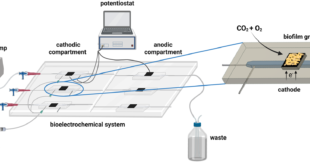
Advances in Engineering Advances in Engineering features breaking research judged by Advances in Engineering advisory team to be of key importance in the Engineering field. Papers are selected from over 10,000 published each week from most peer reviewed journals.

Macromolecular Materials and Engineering, Volume 299, Issue 2, pages 190–197, 2014. Alexis E. Abelow1, Kristin M. Persson2,Edwin W. H. Jager2, Magnus Berggren2,*, Ilya Zharov11. Department of Chemistry, University of Utah, Salt Lake City, USA.
2. Department of Science and Technology, Linköping University, Norrköping, Sweden.
Abstract
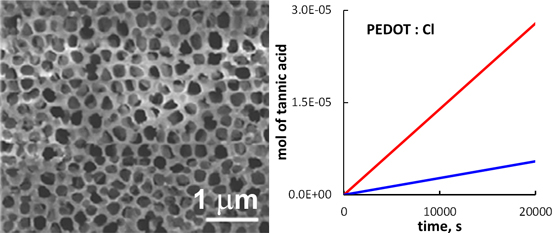
Electrically-active nanoporous membranes are prepared by coating the surface of anodized alumina with electroactive polymers using vapor phase polymerization with four combinations of conjugated polymers and doping ions: poly(3,4-ethylenedioxythiophone) and polypyrrole, FeCl3 and FeTs3. The permeability of the polymer-coated membranes is measured as a function of the applied electric potential. A reversible three-fold increase is found in molecular flux of a neutral dye for membranes in oxidized state compared to that in the reduced state. After analyzing various factors that may affect the molecular transport through these membranes, it is concluded that the observed behavior results mostly from swelling/deswelling of the polymers and from the confinement of the polymers inside the nanopores.
Copyright © 2014 WILEY-VCH Verlag GmbH & Co. KGaA, Weinheim.
Go To Macromolecular Materials and Engineering
Significance statement
Responsive nanoporous membranes have been used in studying the transport of small and macromolecules through nanopores, and in various applications, including separations of biomacromolecules and pharmaceuticals, sensing and novel medical devices. Many of these applications are based on the ability to control the transport through the nanopores. Responsive nanoporous membranes can be produced by modifying the pore surfaces with a molecular layer containing chargeable moieties that are capable of electrostatic interactions with the diffusing species. Alternatively, controlled molecular transport can be achieved by modifying the pore surfaces with responsive polymer molecules that respond to environmental stimuli and sterically block/unblock the pores.
The present work describes the preparation of anodized alumina nanoporous membranes coated with a responsive conducting polymer. The permeability of these membranes is controlled by the applied electric potential. Reversible control of transport via an external electric stimulus may be useful in drug-release devices, in size-, charge- and structure-selective separations, and in microfluidic and sensing devices. Presently, these application are under investigation in Zharov’s research laboratory.
Ordered inorganic responsive membranes can be prepared using other techniques. For example, Zharov’s group developed the preparation of surface modified silica colloidal membranes by self-assembly of silica nanoparticles, followed by their sintering and surface modification of the colloidal nanopores. They also developed the preparation of nanoporous membranes by the reversible assembly of polymer-grafted silica nanoparticles. These membranes have been used in ultrafiltration and fuel cells.
Related papers
– Schepelina, O.; Poth, N.; Zharov, I. pH-Responsive nanoporous silica colloidal membranes. Adv. Funct. Mater. 2010, 20, 1962-1969.
– Zharov, I.; Khabibullin, A. Surface-modified silica colloidal crystals: nanoporous materials with controlled molecular transport. Acc. Chem. Res. 2014, 47, 440-449.
– Khabibullin, A.; Fullwood, E.; Kolbay, P.; Zharov, I. Reversible assembly of tunable nanoporous membranes from “hairy” silica nanoparticles. ACS Appl. Mater. Interfaces 2014, 6, 17306-17312.
– Khabibullin, A.; Minteer, S. D.; Zharov, I. The effect of sulfonic acid group content in pore-filled silica colloidal membranes on their proton conductivity and direct methanol fuel cell performance. J. Mater. Chem. A. 2014, 2, 12761-12769.
Figure legend
Left: SEM (top view) of PEDOT-modified Anodisc membrane. Right: flux of a dye through PEDOT-modified Anodisc membrane doped with Cl– at +0.8 V (red) and -0.8 V (blue) applied potential.