Advances in Engineering Advances in Engineering features breaking research judged by Advances in Engineering advisory team to be of key importance in the Engineering field. Papers are selected from over 10,000 published each week from most peer reviewed journals.

Polymer Composites, Volume 35, Issue 3, pages 427–434, March 2014.
Pedro Cortes*
Civil/Environmental and Chemical Engineering Department, Youngstown State University, One University Plaza, Youngstown, Ohio.
Abstract
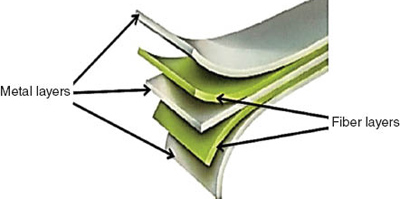
The present research program has studied the fracture properties of a Fiber-Metal Laminate (FML) system constituted by aluminum alloy and a high-impact self-reinforced composite material. Here, the self-reinforced composite system consists of a polypropylene matrix reinforced with polypropylene fibers. Initial testing has shown that a though adhesion can be achieved between the aluminum layers and the composite material by incorporating a thermoplastic adhesive interlayer at the common interface. The adhesion at the metal–composite interface has been studied under a wide range of strain rate conditions using a Single Cantilever Beam test geometry, and it has been shown that the interfacial fracture toughness is loading rate sensitive. Interlaminar delamination tests of the plain composite have also been studied and it was shown that their fracture toughness is also loading rate sensitive. Additional tensile tests have shown that the tensile strength and moduli of the FMLs are linearly influenced by the volume fraction of their constituent materials as well as are successfully predicted using a simple rule of mixture. Low velocity impact tests have also shown that the FMLs based on a self-reinforced polypropylene composite yielded specific perforation energies well above the 30 J m2/kg. It was also shown that by increasing the number of metal and composite plies in the FMLs, resulted in hybrid structures capable of absorbing higher specific low velocity impact energies.
© 2013 Society of Plastics Engineers