Advances in Engineering Advances in Engineering features breaking research judged by Advances in Engineering advisory team to be of key importance in the Engineering field. Papers are selected from over 10,000 published each week from most peer reviewed journals.

Acta Materialia, Volume 60, Issue 3, February 2012, Pages 994-1003
Y.E. Kalay, I. Kalay, Jinwoo Hwang, P.M. Voyles, M.J. Kramer
Department of Metallurgical and Materials Engineering, Middle East Technical University, Ankara 06800, Turkey
Department of Materials Science and Engineering, Cankaya University, Ankara 06530, Turkey
Materials Research Laboratory, University of California, Santa Barbara, Santa Barbara, CA 93106, USA
Department of Materials Science and Engineering, University of Wisconsin-Madison, Madison, WI 53706, USA
Ames Laboratory US DOE, Ames, IA 50011, USA
Department of Materials Science and Engineering, Iowa State University, Ames, IA 50011, USA
Abstract
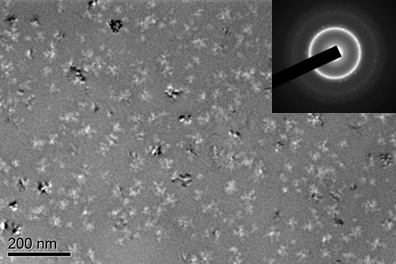
How the chemical and topological short- to medium-range order develops in Al–Tb glass and its ultimate effect on the control of the high number density of face-centered-cubic-Al (fcc-Al) nuclei during devitrification are described. A combined study using high-energy X-ray diffraction (HEXRD), atom probe tomography (APT), transmission electron microscopy and fluctuation electron microscopy (FEM) was conducted in order to resolve the local structure in amorphous Al90Tb10. Reverse Monte Carlo simulations and Voronoi tessellation analysis based on HEXRD experiments revealed a high coordination of Al around Tb atoms in both liquid and amorphous states. APT results show Al-rich and Al-depleted regions within the as-quenched alloy. A network structure of Tb-rich clusters divides the matrix into nanoscale regions where Al-rich clusters are isolated. It is this finely divided network which allows the amorphous structure to form. Al-rich regions are the locus for fcc-Al crystallization, which occurs before the intermetallic crystallization. FEM reveals medium-range ordered regions ∼2 nm in diameter, consistent with fcc-Al and trigonal-like Al3Tb crystal structures. We propose that the high coordination of Al around Tb limits diffusion in the intermetallic network, allowing for the isolated Al-rich regions to form at high density. These regions are responsible for the extremely high density of Al nanocrystal nuclei.
Figure Legend
Highly populated fcc-Al nanocrystal nucleated on an amorphous matrix