Advances in Engineering Advances in Engineering features breaking research judged by Advances in Engineering advisory team to be of key importance in the Engineering field. Papers are selected from over 10,000 published each week from most peer reviewed journals.

Tomohide Yabuki1, , Randy Samaroo2, , Osamu Nakabeppu3, Masahiro Kawaji2. Experimental Thermal and Fluid Science, Available online 10 February 2015.
[expand title=”Show Affiliations”]- Department of Mechanical and Control Engineering, Kyushu Institute of Technology, Kitakyushu, Fukuoka, Japan.
- Mechanical Engineering Department and the CUNY Energy Institute, City College of New York, New York, USA.
- Department of Mechanical Engineering, Meiji University, Kawasaki, Kanagawa, Japan. [/expand]
Abstract
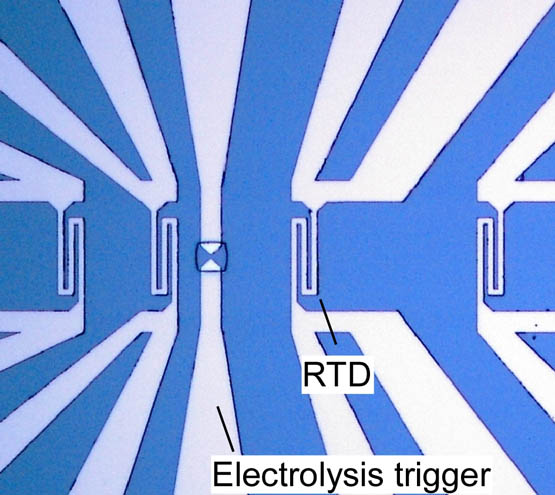
Subcooled flow boiling experiments have been conducted using water at atmospheric pressure in a rectangular flow channel. These experiments are conducted in support of a US DOE Nuclear HUB project, the Consortium for Advanced Simulation of Light Water Reactors (CASL). CASL aims at the development of an environment for predictive simulation of light water reactors, and subcooled flow boiling is investigated experimentally in order to develop and validate 3-D Interface Tracking Models (ITMs). In the present experiments, a MEMS sensor has been used to obtain wall temperature response during nucleation, growth and departure of a vapor bubble in subcooled water flowing upward through a vertical rectangular test section. High-speed video images and MEMS sensor data collected at 5000 fps and 50 kHz, respectively, revealed rapid microlayer evaporation, dryout and rewetting phenomena under a single vapor bubble following nucleation accompanied by rapid wall temperature changes of up to ∼10 K.
Go To Experimental Thermal and Fluid Science