Advances in Engineering Advances in Engineering features breaking research judged by Advances in Engineering advisory team to be of key importance in the Engineering field. Papers are selected from over 10,000 published each week from most peer reviewed journals.

Journal of Signal Processing Systems, July 2014. Adnan Shah.
1. National ICT Australia, Canberra Research Laboratory, PO Box 8001, Canberra, ACT, 2601, Australia and
2. The College of Engineering and Computer Science, Australian National University, Canberra, Australia.
Abstract
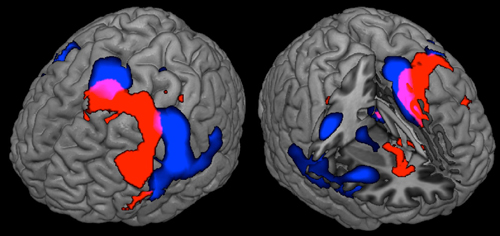
A model-free method for efficiently capturing drifts in functional magnetic resonance imaging (fMRI) data is presented. The proposed algorithm applies a first order differencing to the fMRI time series samples in order to remove the drift effect. Initially, a consistent hemodynamic response function (HRF) of the fMRI voxel is estimated using linear least-squares. An optimal estimate of the drift is then obtained based on a wavelet thresholding technique applied to the generated residuals after eliminating the induced activation response. Finally, the de-drifted fMRI voxel response is acquired by removing the estimated drift from the fMRI time-series. Its performance is assessed using simulated and motor-task real fMRI data sets obtained from both block and event-related designs. The application results reveal that the proposed method, which avoids the selection of a model to remove the drift component unlike traditional methods, is efficient in de-drifting the fMRI time-series and offers blood oxygen level-dependent (BOLD)-fMRI signal improvement and enhanced activation detection.