Advances in Engineering Advances in Engineering features breaking research judged by Advances in Engineering advisory team to be of key importance in the Engineering field. Papers are selected from over 10,000 published each week from most peer reviewed journals.

Significance statement:
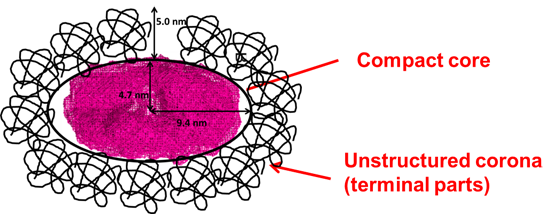
Conformational diseases involve proteins or peptides whose conformation changes from the normal biologically active state, gaining a novel and toxic function. These protein molecules self-assemble in a complicated aggregation process which involve small aggregates named oligomers and large insoluble amyloid fibrils. In the neurodegenerative disease Parkinson’s Disease (PD), the small protein α-synuclein (αSN) forms intracellular inclusions as well as small soluble oligomers. The major cytotoxic species are not the mature fibrils themselves, but rather oligomers, either precursors to or co-existing in competition with fibrils. Oligomer cytotoxicity is attributed to their ability to disrupt cellular membranes, but unwanted interactions of these “sticky” and only partially folded complexes with other cellular components may also play a role. This makes αSN oligomers one of the most important targets for drug discovery within conformational diseases. The present work is significant at several levels: (1) we show that the major oligomer is a relatively homogeneous species of around 30 monomers but co-exists in equilibrium with larger oligomeric species of average size ~400 monomers. (2) consistent with this tendency to form higher but non-fibrillar structures, we provide firm quantitative evidence to show that the aSN oligomer in fact is not a fibril precursor but actively (though modestly) inhibits fibril formation. We have been able to model its concentration-dependent inhibition to show that it interferes both with the initial formation of a fibril nucleus as well as the subsequent elongation of this nucleus to form fibrils. (3) using Small-Angle X-ray scattering we reveal that the major oligomer consists of a well-defined folded core with a more diffuse corona of dynamic polypeptide chains. This work advances our understanding of the structure and formation of a very important species in the development of Parkinson’s Disease.
Possible extension:
In subsequent work we have extended our analysis of oligomer structure using Hydrogen-Deuterium Exchange Mass Spectrometry to show that the major oligomer has a small but highly stable core and more rapidly exchanging termini (consistent with the extended regions of the SAXS structure) [1]; this oligomer is remarkably robust against extreme conditions, surviving high temperatures, anionic surfactants, acid/alkaline pH and molar concentrations of denaturants [2], but can be inhibited from permeabilizing membranes simply by adding the green tea extract epigallocatechin gallate which immobilizes its flexible C-terminal tail and reduces its membrane affinity significantly [3].
REFERENCES
[1] W. Paslawski, S. Mysling, K. Thomsen, T.J.D. Jørgensen, D.E. Otzen, Co-existence of two different {Alpha}-synuclein oligomers with different core structures determined by Hydrogen/Deuterium Exchange Mass Spectrometry, Angew Chem Int Ed Engl, 53 (2014) 7560-7563. [2] W. Paslawski, M. Andreasen, S.B. Nielsen, N. Lorenzen, K. Thomsen, J.D. Kaspersen, J.S. Pedersen, D.E. Otzen, High stability and cooperative unfolding of cytotoxic α-synuclein oligomers Biochemistry, In press (2014). [3] N. Lorenzen, S.B. Nielsen, Y. Yoshimura, C.B. Andersen, C. Betzer, B.S. Vad, J.D. Kaspersen, G. Christiansen, J.S. Pedersen, P.H. Jensen, F.A. Mulder, D.E. Otzen, How epigallogatechin gallate can inhibit {Alpha}-synuclein oligomer toxicity in vitro, J. Biol. Chem., 289 (2014) 21299-21310. [4] L. Giehm, D.I. Svergun, D.E. Otzen, B. Vestergaard, Low resolution structure of a vesicle disrupting {Alpha}-synuclein oligomer that accumulates during fibrillation, Proc. Natl. Acad. Sci. U.S.A. , 108 (2011) 3246-3251.
Figure legend: The figure shows the core of the oligomer (in purple; obtained from an earlier SAXS study [4]) overlaid on the present model of our oligomer and emphasizing the dimensions of the core and extended region.
Journal Reference
Am. Chem. Soc., 2014, 136(10), pp 3859–3868.
Nikolai Lorenzen †, Søren Bang Nielsen †,Alexander K. Buell ‡, Jørn Døvling Kaspersen §,Paolo Arosio ‡, Brian Stougaard Vad †, Wojciech Paslawski †, Gunna Christiansen ∥, Zuzana Valnickova-Hansen †, Maria Andreasen †, Jan J. Enghild †, Jan Skov Pedersen §, Christopher M. Dobson ‡, Tuomas P. J. Knowles ‡, Daniel Erik Otzen *†
†Department of Molecular Biology, Center for Insoluble Protein Structures (inSPIN) and
§Department of Chemistry, Interdisciplinary Nanoscience Center (iNANO), Aarhus University, Gustav Wieds Vej 14, 8000 Aarhus C, Denmark and
‡ Department of Chemistry, University of Cambridge, Lensfield Road, CB2 1EW, Cambridge United Kingdom and
∥ Department of Biomedicine-Medical Microbiology and Immunology, Aarhus University, 8000 Aarhus C, Denmark.
Abstract
Studies of proteins’ formation of amyloid fibrils have revealed that potentially cytotoxic oligomers frequently accumulate during fibril formation. An important question in the context of mechanistic studies of this process is whether or not oligomers are intermediates in the process of amyloid fibril formation, either as precursors of fibrils or as species involved in the fibril elongation process or instead if they are associated with an aggregation process that is distinct from that generating mature fibrils. Here we describe and characterize in detail two well-defined oligomeric species formed by the protein {Alpha}-synuclein (αSN), whose aggregation is strongly implicated in the development of Parkinson’s disease (PD). The two types of oligomers are both formed under conditions where amyloid fibril formation is observed but differ in molecular weight by an order of magnitude. Both possess a degree of {Beta}-sheet structure that is intermediate between that of the disordered monomer and the fully structured amyloid fibrils, and both have the capacity to permeabilize vesicles in vitro. The smaller oligomers, estimated to contain ∼30 monomers, are more numerous under the conditions used here than the larger ones, and small-angle X-ray scattering data suggest that they are ellipsoidal with a high degree of flexibility at the interface with solvent. This oligomer population is unable to elongate fibrils and indeed results in an inhibition of the kinetics of amyloid formation in a concentration-dependent manner.
Copyright © 2014 American Chemical Society