Advances in Engineering Advances in Engineering features breaking research judged by Advances in Engineering advisory team to be of key importance in the Engineering field. Papers are selected from over 10,000 published each week from most peer reviewed journals.

Significance Statement
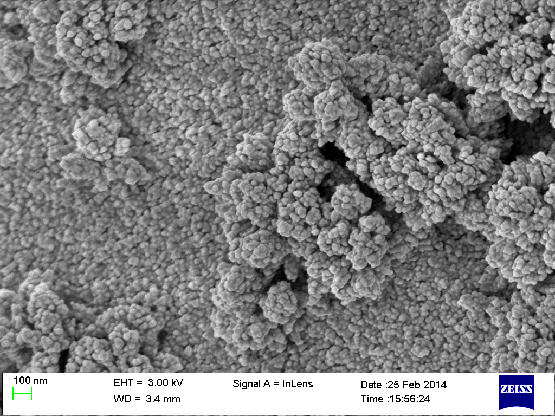
Figure legend: Rutile TiO2 hierarchical nanostructures constructed on a wood substrate
Journal Reference
Rongbo Zheng1,2 , Mandla A. Tshabalala3, , , Qingyu Li1, Hongyan Wang4. Applied Surface Science, Volume 328, 15 February 2015, Pages 453–458.
[expand title=”Show Affiliations”]- College of Science, Southwest Forestry University, Kunming 650224, PR China
- Wood Adhesives and Glued Products Key Laboratory of Yunnan Province, Southwest Forestry University, Kunming 650224, PR China
- S. Department of Agriculture, Forest Service, Forest Products Laboratory, One Gifford Pinchot Drive, Madison, WI 53726-2398, USA
- Zhejiang Forestry Academy, Hangzhou 310023, PR China
Abstract
A convenient room temperature approach was developed for growing rutile TiO2hierarchical structures on the wood surface by direct hydrolysis and crystallization of TiCl3 in saturated NaCl aqueous solution. The morphology and the crystal structure of TiO2 coated on the wood surface were characterized by scanning electron microscopy (SEM) and X-ray diffraction (XRD), respectively. The TiO2 morphology on the wood surface could be tuned by simply changing either the reaction time or pH value of the reaction mixture. After modification with perfluorodecyltriethoxysilane (PFDTS), the water contact angle (WCA) of the TiO2-treated wood (T1) surface increased to 140.0 ± 4.2°, which indicated a highly hydrophobic wood surface. In addition, compared with untreated control wood, PFDTS-TiO2 treatment (PFDTS-T1-treated) not only reduced liquid water uptake, but also delayed the onset of water saturation point of the wood substrate. The weight change of PFDTS-T1-treated wood after 24 h of water immersion was 19.3%, compared to 81.3% for the untreated control wood. After 867 h of water immersion, the weight change for the treated and untreated wood specimens was 117.1%, and 155.1%, respectively. The untreated control wood reached the steady state after 187 h, while the PFDTS-T1-treated wood did not reach the steady state until after 600 h of immersion.