Advances in Engineering Advances in Engineering features breaking research judged by Advances in Engineering advisory team to be of key importance in the Engineering field. Papers are selected from over 10,000 published each week from most peer reviewed journals.

Ping Yang, Aiyu Zhang, Masanori Ando, Norio Murase
Colloids and Surfaces A: Physicochemical and Engineering Aspects, Volume 397, March 2012
Abstract
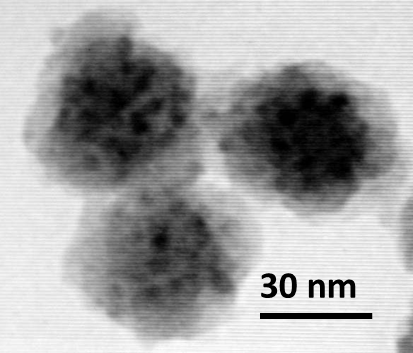
We are preparing small glass capsules (several tens of nanometers) with impregnated emitting quantum dots (QDs) mainly for application to biological tagging usage.
Carefully prepared QDs are known to emit brightly and be robust against ultraviolet (UV) irradiation compared with organic dye molecules. However, application requests more blight and robust ones. Further, single QD inherently shows intermittency of photoluminescence (PL), named blinking, because of their ionization upon irradiation. Another serious problem is its cytotoxity. Currently the most bright QD with narrow PL spectral width is ZnS coated CdSe QDs. We always have to worry about the influence of Cd from QDs on cells when used as fluorescent reagents. Silica glass and its derivatives are known as matrices to protect ingredients because of its 4-armed rigid network of Si-O-Si. When many QDs are incorporated into glass capsules without deteriorating their initial PL properties, all of these problems are settled simultaneously. Namely, the glass capsules are more bright without showing blinking because of the averaging effect, and more robust against UV irradiation without worrying very much about the Cd leakage from QDs.
In this time, we have prepared such glass capsules via surface coordination of silane coupling agent (Mercaptopropyl tribethoxysilane, MPS, functional sulfydryl group) on QD at the first step of the preparation. This is a modification of our recently reported 3-step synthesis via coordination of partially hydrolyzed tetraethoxysilane (Chem. Commun., 2010). The capsules were proved to be sufficiently blight with rather continuous PL intensity, and show orders of less amount of Cd leaked out from QDs when compared with commercially available polymer coated QDs. The advantage of the current method is the ability to prepare capsules with various sizes from ca. 30-100 nm easily. Their surfaces are easily coated with functional groups such as COOH and SH by using silane coupling agents. We are currently working on their bioconjugation as much specific as possible.
Go to Journal