Advances in Engineering Advances in Engineering features breaking research judged by Advances in Engineering advisory team to be of key importance in the Engineering field. Papers are selected from over 10,000 published each week from most peer reviewed journals.

Surface and Coatings Technology, Volume 206, Issue 17, 25 April 2012, Pages 3645-3649
Kamil Zuber, Colin Hall, Peter Murphy, Drew Evans
Mawson Institute, University of South Australia, Mawson Lakes SA 5095, Australia
Ian Wark Research Institute, University of South Australia, Mawson Lakes SA 5095, Australia
Abstract
In this study, thin chrome alloy reflective coatings of less than 50 nm are prepared by magnetron co-sputtering chrome and a dopant material onto coated polymeric substrates. This report shows that the lattice parameter of the alloy of chrome and dopant can be used to control the macroscopic abrasion resistance of the coating. These alloy structures are not predicted by thermodynamic equilibrium phase diagrams, illustrating the ability of physical vapour deposition to generate novel coatings. As these coatings are deposited on substrates having a glass transition temperature below 150 °C, the structure after deposition but without post processing is critical because conventional post processing (high temperature annealing) cannot be applied.
Additional Information
As the world moves towards a more sustainable way of life, surface engineering is becoming an increasingly important discipline. Thin coatings can be deposited onto substrates to either protect it from damage and/or add functional properties it didn’t have before. When plastic is used as the substrate, excessive heating needs to be reduced or eliminated (so the substrates don’t deform or damage). This places great importance on creating coatings that perform well without post-processing (i.e. in their as-deposited state). Our recent studies have explored the deposition of thin metal alloy and metal oxide layers in multilayer structures, with respect to abrasion resistance (Wear, 297 (1-2) 986991, 2013), corrosion resistance (Corrosion Science, 69
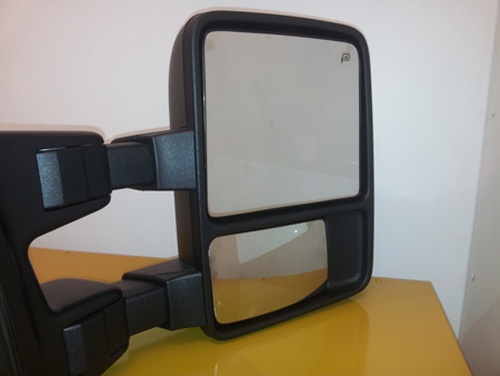
406-411, 2013) and electrical resistivity (Scripta Materialia, 67 (10) 866-869, 2012). When all these properties of the multilayer structure are taken into account, then devices and products can be fabricated on plastic substrates that are robust enough for use in the real world (outside the lab environment). For example, automotive mirrors can be fabricated on plastic substrates which meet all the relevant safety and performance specifications for use on new vehicles.