Advances in Engineering Advances in Engineering features breaking research judged by Advances in Engineering advisory team to be of key importance in the Engineering field. Papers are selected from over 10,000 published each week from most peer reviewed journals.

György Székely, Joao Bandarra, William Heggie, Börje Sellergren, Frederico Castelo Ferreira
Separation and Purification Technology, Volume 86, February 2012
Abstract
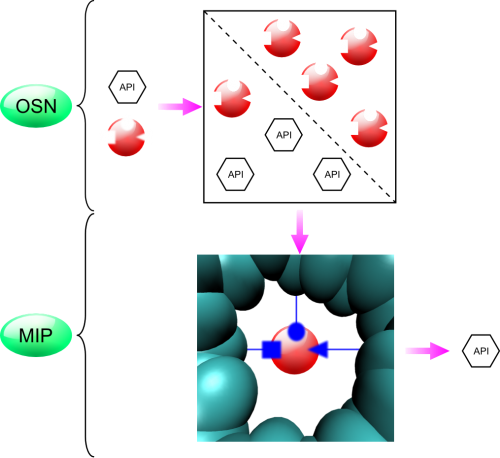
The present study evaluates the adequacy of different approaches for the removal of 1,3-diisopropylurea (IPU), a potentially genotoxic impurity (GTI) from active pharmaceutical ingredients (APIs). The use of Organic solvent nanofiltration (OSN) to separate APIs and IPU, based on their molecular size difference was first evaluated using different membranes and solvents, and GMT-oNF-2 membrane was tested in diafiltration mode for the removal of IPU when dissolved in dichloromethane (DCM). A diafiltration dilution ratio of 3 was found as optimum to achieve 90% removal of IPU with a 2.5% loss of the model API. A novel IPU-selective Molecularly Imprinted Polymer (MIP) was then used for final polishing to remove remaining IPU. Hence, below 100 ppm IPU, IPU removal of 83% was achieved in one single stage. A selective elution system was also developed, consisting of the use of methyl isobutyl ketone (MIBK) in the first steps to recover virtually all the API that binds non-specifically to the MIP scavenger and methanol on the later steps to remove IPU and recover the MIP. The selectivity and stability of the MIP scavenger was validated over 18 independent operations using the same MIP sorbent. The combination of OSN with a diafiltration dilution ratio of 3 and a single MIP polishing stage allows reducing the IPU contamination from 100 mgIPU/gAPI to 2 mgIPU/gAPI with an API loss, mostly at the OSN stage, of about 3%. The results obtained using the hybrid OSN–MIP process were compared to those using MIP scavengers or OSN alone. The MIP–OSN hybrid approach, combining the advantages of both techniques, offers an attractive new approach for API purification.
Additional information :
The recently published article evaluates the adequacy of a hybrid approaches for the removal of a potentially genotoxic impurity (GTI) from active pharmaceutical ingredients (APIs). The synergistic combination of Organic Solvent Nanofiltration (OSN) and Molecular Imprinting (MI) was successfully applied in the degenotoxification of a steroid drug product. The novel approach takes advantage of the fact that OSN performs better at high GTI concentrations while MI – as a polishing phase – showed high performance in the scavenging of trace amounts of GTIs. The challenges of API recovery and MIP recycling have been overcome by the development of a selective, gradient elution. The authors believe that such synergistic approaches of different technologies will play a key role in the next generation of API degenotoxification.
Go to Journal