Advances in Engineering Advances in Engineering features breaking research judged by Advances in Engineering advisory team to be of key importance in the Engineering field. Papers are selected from over 10,000 published each week from most peer reviewed journals.

Sensors and Actuators B: Chemical, Volume 173, October 2012, Pages 133-138
Junsheng Yu, Xinge Yu, Lin Zhang, Hongjuan Zeng
State Key Laboratory of Electronic Thin Films and Integrated Devices, School of Optoelectronic Information, University of Electronic Science and Technology of China (UESTC), Chengdu 610054, PR China
Abstract
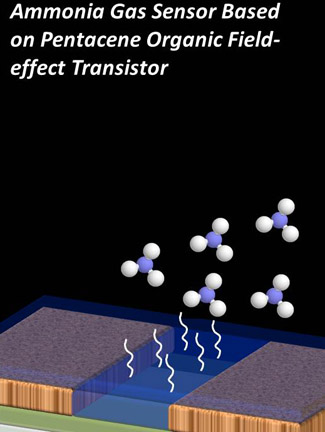
Ammonia (NH3) sensors based on bottom contact organic field-effect transistors (OFETs) were created using pentacene as an active layer and polymerthylmethacrylate (PMMA) as an insulator. The OFET sensors exhibited a change in the electric characteristics such as the threshold voltage, the saturation current, and the field-effect charge carrier mobility when the sensors were exposed to different NH3 concentrations. Meanwhile, the favorable and rapid NH3 response characteristics of the OFET sensors were observed from the change in the drain-source current as a function of time, when the sensors were exposed to various cycles of exposure/evacuation of different NH3 concentrations ranging from 10 to 100 ppm. Moreover, the environmental stability of the OFET sensors to constantly detect the NH3 gas in air was studied by storing the sensors in air for 30 days.