Advances in Engineering Advances in Engineering features breaking research judged by Advances in Engineering advisory team to be of key importance in the Engineering field. Papers are selected from over 10,000 published each week from most peer reviewed journals.

Journal of Polymer Research, 2014, 21:434.
Sampada Bodkhe1,3, P. S. M. Rajesh1,3, Sudhir Kamle1, Vivek Verma2.
1 Department of Aerospace Engineering, Indian Institute of Technology Kanpur, Kanpur, India, 208 016 and
3Department of Mechanical Engineering, Ecole Polytechnique de Montreal, Montreal, QC, H3C 3A7, Canada and
2Department of Materials Science and Engineering, Centre for Environmental Science & Engineering, Thematic Unit of Excellence on Soft Nanofabrication with Application in Energy, Environment & Bio platform, Indian Institute of Technology Kanpur, Kanpur, India, 208 016.
Abstract
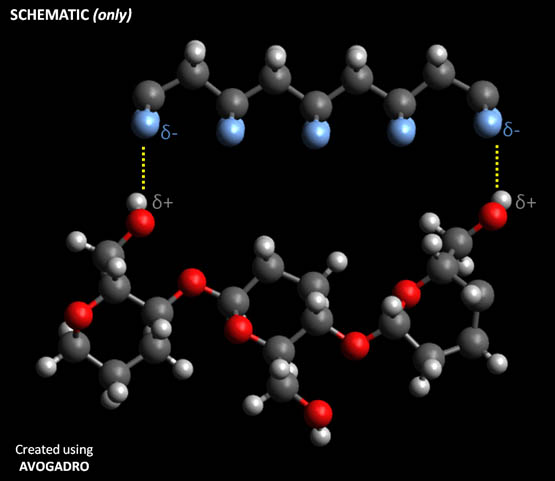
The beta-phase in polyvinylidene fluoride (PVDF) is responsible for its ferro-, piezo- and pyroelectric properties, key for memory, sensing and actuation applications. Filler addition as a route to enhance the smart beta-phase in PVDF is presented in this study. PVDF composites with varying concentrations of microcrystalline cellulose, carbon nanotubes and kaolinite clay were prepared by solution-sonication method and subsequently cast into thin standing composite films. Crystallinity of PVDF and its composites were found to be similar. Phase evolution studies showed that addition of microcrystalline cellulose yields a beta-phase fraction comparable to carbon nanotubes and significantly higher than that of clay. The mechanism of interaction between microcrystalline cellulose and PVDF is also proposed.