Advances in Engineering Advances in Engineering features breaking research judged by Advances in Engineering advisory team to be of key importance in the Engineering field. Papers are selected from over 10,000 published each week from most peer reviewed journals.

Powder Technology, Volume 256, April 2014, Pages 113-117.
C.A. Crane, M.L. Pantoya, B.L. Weeks, M. Saed.
Los Alamos National Laboratory, P.O. Box 1663, Los Alamos, NM 87545, USA and
Department of Electrical & Computer Engineering, Texas Tech University, Lubbock, TX 79409, USA and
Department of Mechanical Engineering, Texas Tech University, Lubbock, TX 79409, USA and
Department of Chemical Engineering, Texas Tech University, Lubbock, TX 79409, USA
Abstract
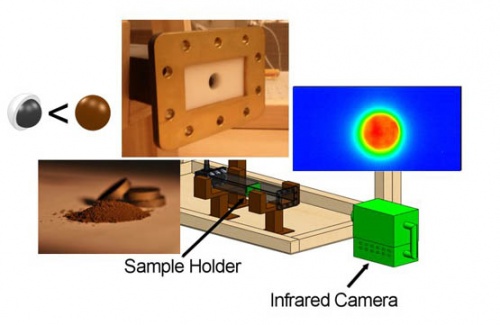
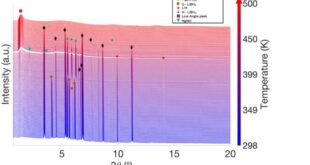
To understand the effect of particle size on microwave absorption, it is important to separate absorption in good bulk conductors (like aluminum or copper) from dielectrics, like iron oxide (Fe2O3). This study experimentally examined coupling microwaves to powder compacts of discretely different materials such as aluminum and iron oxide as a function of particle size. An electromagnetic chamber exposed compacted powder samples of each material to microwaves at a frequency of 3.3 GHz and in-situ 2-D spatial temperature measurements of the sample surface were captured to quantify microwave heating. Results show that for the non-conductive oxidizer (Fe2O3), decreasing the particle size increased the microwave absorption because of the increase in effective surface area and effective conductivity. In contrast, decreasing the conductive metal (Al) particle size resulted in decreased microwave absorption because the ratio of particle size to the skin depth was shown to be a critical parameter controlling energy absorption. This research contributes to new understandings of how microwave energy interacts with metal and metal oxide compacted pellets as a function of particle size.