Advances in Engineering Advances in Engineering features breaking research judged by Advances in Engineering advisory team to be of key importance in the Engineering field. Papers are selected from over 10,000 published each week from most peer reviewed journals.

Significance statement
Al-Cu-Mg alloys are widely used in aerospace and other industrial applications because of its integration of strength, damage tolerance, formability and density. Al-Cu-Mg alloys derive their strength from heterogeneous microstructure that consists of hardening precipitates and dispersoids.
The pitting of Al-Cu-Mg alloy is believed to originate from the local dissolution of S-Al2CuMg particles, and the dissolution activity differs from one particle to another. Nevertheless, the initial site where the dissolution of S phase preferentially occurs and the cause of the heterogeneity in the electrochemical dissolution activity are still vague so far, which hinder our understanding on pitting initiation of Al-Cu-Mg alloys.
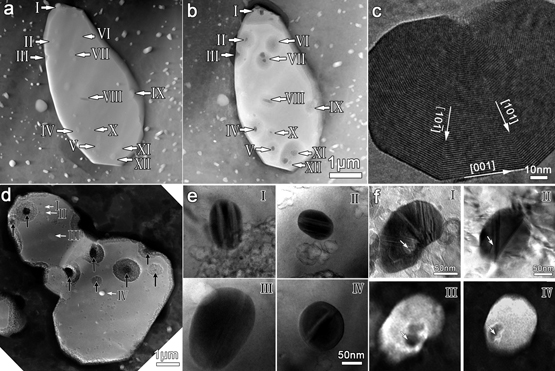
Prof. Ma’s group at Institute of Metal Research, Chines Academy of Sciences applied in-situ ex-environmental transmission electron microscopy (TEM) and identified a large number of nano-sized Al20Cu2Mn3 approximants of the decagonal quasicrystal (DQC) embedded in the S phase. They find that the S phase with Al20Cu2Mn3 inclusions behaves more active than those free of the approximants. Such a preference is clarified to result from the decomposition of Al20Cu2Mn3 approximant prior to the dissolution of S phase. In addition, they also find that Al20Cu2Mn3 approximants behave electrochemically different. The approximants with multiple twins are more active than those with few planar defects.
This work not only reveals the structural origins of the heterogeneity in dissolution and electrochemical activity of constitutes in 2024Al alloy, but also reminds us to attach importance to the nano-sized dispersoids which have been neglected in electrochemistry in the past a few decades. These results imply that controlling the distribution of constitutes could be a strategy to improve the pitting resistance of Al-Cu-Mg alloys. This work is expected to contribute to excellence in engineering, scientific and industrial research.
Figure Legend:
In situ ex-environmental TEM observation revealing the structural origins of the heterogeneity in dissolution and electrochemical activity of constitutes in 2024Al alloy.
Journal Reference
J. Wang, B. Zhang, Y.T. Zhou, X.L. Ma. Acta Materialia, Volume 82, 2015, Pages 22-31.
Shenyang National Laboratory for Materials Science, Institute of Metal Research, Chinese Academy of Sciences, Wenhua Road 72, 110016 Shenyang, People’s Republic of China.
Abstract
The pitting of Al–Cu–Mg alloy is believed to originate from the local dissolution of S-Al2CuMg particles, and the dissolution activity differs from one particle to another. Nevertheless, the initial site where the dissolution of the S phase preferentially occurs and the cause of the heterogeneity in the electrochemical dissolution activity remain unknown, hindering our understanding of pitting initiation of Al–Cu–Mg alloys. In this work, we have applied in situ ex-environmental transmission electron microscopy and identified a large number of nanosized Al20Cu2Mn3 approximants of the decagonal quasicrystal embedded in the S phase. We find that the S phase with Al20Cu2Mn3 inclusions is more active than those free of the approximants. Such a preference is clarified to result from the decomposition of Al20Cu2Mn3 approximant prior to the dissolution of the S phase. In addition, we also find that the electrochemical behavior of Al20Cu2Mn3approximants is different. The approximants with multiple twins are more active than those with few planar defects.