Advances in Engineering Advances in Engineering features breaking research judged by Advances in Engineering advisory team to be of key importance in the Engineering field. Papers are selected from over 10,000 published each week from most peer reviewed journals.

Dyes and Pigments, Volume 114, March 2015, Pages 175–183. Simona Urnikaite1,2, Maryte Daskeviciene1, Robert Send3, Henrike Wonneberger3,Algirdas Sackus1,2, Ingmar Bruder3, Vytautas Getautis1
1 Department of Organic Chemistry, Kaunas University of Technology, Radvilenu pl. 19, LT-50254 Kaunas, Lithuania
2 Institute of Synthetic Chemistry, Kaunas University of Technology, Radvilenu pl. 19, LT-50254 Kaunas, Lithuania
3 BASF SE, Carl-Bosch-Str. 38, 67056 Ludwigshafen, Germany
Abstract
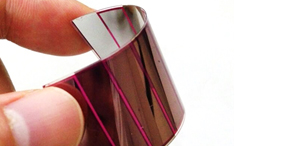
D-D-π-A architecture metal-free organic dyes, containing a hydrazone moiety as an auxiliary donor were designed and synthesized for solid-state dye-sensitized solar cells. The sensitizer series was designed to develop a structure-property relationship. These dyes were obtained from the relatively cheap starting materials, without the use of expensive catalysts, rigorously anhydrous or oxygen-free conditions. The highest solid-state device conversion efficiency 3.9% (JSC = −7.9 mA cm−2, VOC = 760 mV) and fill factor 0.65 under 100 mWcm−2 (AM 1.5G) solar irradiation were achieved with the dye D3 containing a methoxy group attached to the triphenylamine donor unit employed between the hydrazone moiety and rhodanine acceptor of the sensitizer.