Advances in Engineering Advances in Engineering features breaking research judged by Advances in Engineering advisory team to be of key importance in the Engineering field. Papers are selected from over 10,000 published each week from most peer reviewed journals.

European Polymer Journal, Volume 49, Issue 6, June 2013, Pages 1257-1267.
M. Jesús Fernández, M. Dolores Fernández, Ibai Aranburu.
Departamento de Ciencia y Tecnología de Polímeros, Facultad de Química, Universidad del País Vasco (UPV/EHU), Paseo Manuel Lardizábal 3, 20018 San Sebastián, Spain.
Abstract
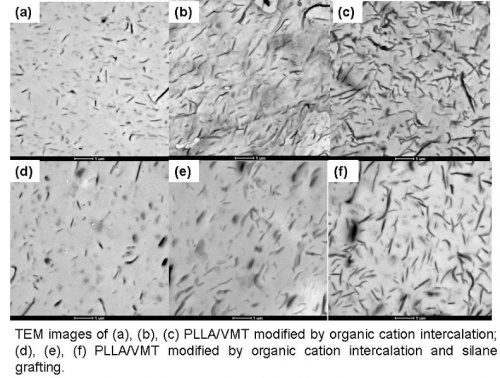
In this work, vermiculite (VMT) was successfully modified by organic cation intercalation (oleyl bis(2-hydroxyethyl) methyl ammonium), silane grafting (glycidoxypropyl trimethoxy silane), and combining silane grafting and alkylammonium cation intercalation. The organically modified VMTs were melt compounded with poly(l-lactic acid) (PLLA), and the effect of the nanofiller concentration and type of modification of the VMT on the nanostructure and thermal properties of the PLLA/organo-VMT nanocomposites was investigated. The effect of the melt processing conditions used in the preparation of nanocomposites on the molecular weights of the polymer matrix was determined by gel permeation chromatography (GPC). The structure of the intercalated surfactant in the modified clays was characterized by X-ray diffraction (XRD) analysis. The morphology of the nanocomposites was examined by XRD and transmission and scanning electron microscopy (TEM, SEM). The thermal behavior of the clays and nanocomposites was analyzed by differential scanning calorimetry (DSC) and thermogravimetry (TGA), and microscale pyrolysis combustion calorimetry (PCFC) was used to measure the flammability of the nanocomposites. GPC analysis showed that the molecular weights of native and unfilled extruded PLLA were similar, while the incorporation of organo-VMTs resulted in a reduction of the PLLA molecular weights. XRD and TEM investigations showed that exfoliation predominantly occurred in 2 wt% nanocomposites, whereas intercalated structures together with exfoliated clays were observed with high contents of organoclays. The double modification of the clay resulted in a higher level of exfoliation, attributed to the enhanced interactions between the end groups of the PLLA and the clay containing the epoxy groups. DSC analysis showed that the glass transition and cold crystallization temperatures of nanocomposites were slightly lower than those of neat PLLA. The crystallization enthalpies increased with the addition of organo-VMTs. However, the crystallinity of the PLLA was unaffected by the addition of clays, only the crystal size and perfection were affected. The nanocomposites prepared with 2 wt% of organoclays displayed increased thermal stability. The flammability test revealed that no significant reduction of fire hazards was caused by the presence of organo-VMTs.
Additional Information
In this work, organically modified vermiculite by alkylammonium cation intercalation, silane grafting, and combining silane grafting and cation intercalation, was melt compounded with poly(L-lactic acid). A larger extent of exfoliation was achieved with low clay loading and silanized organoclay. The incorporation of clays led to a reduction on the molecular weights of the PLLA under the melt processing conditions used in the preparation of nanocomposites.