Advances in Engineering Advances in Engineering features breaking research judged by Advances in Engineering advisory team to be of key importance in the Engineering field. Papers are selected from over 10,000 published each week from most peer reviewed journals.

Solid State Sciences, Volume 14, Issue 1, January 2012, Pages 72-79
D.G. Kellerman, V.S. Gorshkov, E.V. Shalaeva, B.A. Tsaryev, E.G. Vovkotrub
Institute of Solid State Chemistry, Ural Branch of the Russian Academy of Sciences, 620990 Ekaterinburg, Russia
Ural Federal University after the first Russian President B.N. Yeltsin, 620002 Ekaterinburg, Russia
OOO Eliont, ul. Shefskaya, 1 “B”, 620137 Ekaterinburg, Russia
Institute of High-Temperature Electrochemistry, Ural Branch of the Russian Academy of Sciences, 620219 Ekaterinburg, Russia
Abstract
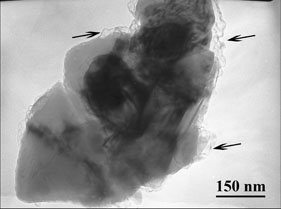
Li4Ti4.92(CrV)0.04O12/C composites were synthesized at 800 °C under a flow of argon/acetylene gas mixture taken in the 40:1volumetric ratio. X-ray diffraction (XRD), thermogravimetric analysis (TGA), magnetic susceptibility, Raman spectroscopy, and electron microscopy (TEM) were used to characterize the phase structure, composition, and morphology of the composites. Transmission electron microscopy and Raman spectroscopy confirmed that carbon exists on the surface of the spinel matrix. The composites proved to have a modified structure in comparison with the pristine spinel phase.
Additional Information:
Lithium titanate (LTO) is highly promising anode material for lithium power sources. The poor electric conductivity of LTO has still been a key limitation for its application. Recent developments have drafted different ways to improve electrical properties of lithium titanate. In this work a study of Li4Ti5O12/C composite materials with conductive both core and surface layer is reported. Li4Ti4.92(CrV)0.04O12/C composites were synthesized at 800 °C under a flow of argon/acetylene gas mixture taken in the 40:1 volumetric ratio. X-ray diffraction (XRD), thermogravimetric analysis (TGA), magnetic susceptibility, Raman spectroscopy, and high resolution electron microscopy (HRTEM) were used to characterize the phase structure, composition, and morphology of the composites. The results of transmission electron microscopy and Raman spectroscopy confirmed a presence of carbon on the surface of the spinel matrix. The concentration of carbon precipitated from gas phase during gas mixture deposition depends on the time of exposure and lies in limits of 0.87-2.87 mass percentage. Oxygen nonstoichiometry δ resulting of reductive condition of synthesis is of about 0.02 in Li4Ti4.92(CrV)0.04O12-δ. Electron microscopic images exhibit the presence of a thin ~ 50 to 200 Ǻ film on the spinel particles. It has typical (002) diffraction reflection of graphite with interlayer distance ~ 3.4 Å.
Analysis of Raman spectra gives reason to suppose that the carbon coated spinel matrix differs from the pristine cubic spinel in the ratio of octahedral and tetrahedral lithium ions, i.e. the annealing in reductive conditions promotes oxygen nonstoichiometry and leads to the structure transformation. Based on the electron microscopic study the authors consider a modified phase as an ordered defect NaCl structure. Thus, the carbonization was shown to lead not only to a carbon coating formation but also to the modification of the matrix spinel structure.
It should be emphasized a positive role of such transformation leading to an increase in poor electronic conductivity of Li4Ti5O12 which is the main obstacle for practical application of the LTO.