Advances in Engineering Advances in Engineering features breaking research judged by Advances in Engineering advisory team to be of key importance in the Engineering field. Papers are selected from over 10,000 published each week from most peer reviewed journals.

Signal, Image and Video Processing, January 2014, Volume 8, Issue 1, pp 111-120.
Peng Li, Chengyu Liu, Xinpei Wang, Dingchang Zheng, Yuanyang Li, Changchun Liu.
School of Control Science and Engineering, Shandong University, 17923 Jingshi Road, Jinan, 250061, People’s Republic of China and
Medical Physics, Institute of Cellular Medicine, Freeman Hospital, Newcastle University, Newcastle upon Tyne, NE7 7DN, UK and
Department of Medical Engineering, Provincial Hospital Affiliated to Shandong University, 9677 Jingshi Road, Jinan, 250014, People’s Republic of China.
Abstract
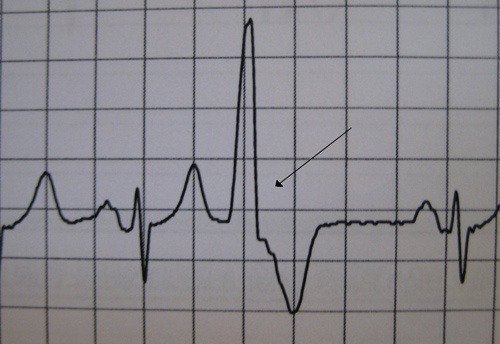
Premature ventricular contraction (PVC) may lead to life-threatening cardiac conditions. Real-time automated PVC recognition approaches provide clinicians the useful tools for timely diagnosis if dangerous conditions surface in their patients. Based on the morphological differences of the PVC beats in the ventricular depolarization phase (QRS complex) and repolarization phase (mainly T-wave), two beat-to-beat template-matching procedures were implemented to identify them. Both templates were obtained by a probability-based approach and hence were fully data-adaptive. A PVC recognizer was then established by analyzing the correlation coefficients from the two template-matching procedures. Our approach was trained on 22 ECG recordings from the MIT-BIH arrhythmia database (MIT-BIH-AR) and then tested on another 22 nonoverlapping recordings from the same database. The PVC recognition accuracy was 98.2 %, with the sensitivity and positive predictivity of 93.1 and 81.4 %, respectively. To evaluate its robustness against noise, our approach was applied again to the above testing set, but this time, the ECGs were not preprocessed. A comparable performance was still obtained. A good generalization capability was also confirmed by validating our approach on an independent St. Petersburg Institute of Cardiological Technics database. In addition, our performance was comparable with these published complex approaches. In conclusion, we have developed a low-complexity data-adaptive PVC recognition approach with good robustness against noise and generalization capability. Its performance is comparable to other state-of-the-art methods, demonstrating a good potential in real-time application.