Advances in Engineering Advances in Engineering features breaking research judged by Advances in Engineering advisory team to be of key importance in the Engineering field. Papers are selected from over 10,000 published each week from most peer reviewed journals.

Journal of Materials Science, 2014, Volume 49, Issue 6, pp 2430-2441.
Matthew Smyth (1) (3), Vida Poursorkhabi (2) (3) , Amar K. Mohanty (2) (3), Stefano Gregori (2) (3), Manjusri Misra (2) (3)
- Department of Physics, University of Guelph, Guelph, ON, N1G 2W1, Canada and
- Bioproducts Discovery and Development Centre, Department of Plant Agriculture, University of Guelph, Crop Science Building, Guelph, ON, N1G 2W1, Canada and
- School of Engineering, University of Guelph, Thornbrough Building, Guelph, ON, N1G 2W1, Canada.
Abstract
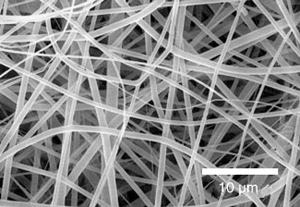
In recent years, there has been an increased focus on sustainable, green alternatives with similar properties to conventional petroleum-based polymers. Poly(lactic acid) (PLA) is a biodegradable biopolymer which exhibits mild piezoelectric properties and has good processability which gives it potential for use in numerous existing and novel applications. The purpose of this study was to produce highly oriented and crystalline PLA electrospun fiber mats for piezoelectric applications. In order to yield a high piezoelectric constant, high crystallinity and fiber orientation are necessary. A two parallel collector set up was used to mechanically orient the fibers in the space between two copper electrodes. Voltage and feed rate were adjusted to produce smooth, oriented fibers with average diameters ranging 0.73–1.19 um. Crystallinity and orientation were increased via hot drawing of the fiber mats and were maximized between 40 and 50 % and greater than 50 %, respectively.