Advances in Engineering Advances in Engineering features breaking research judged by Advances in Engineering advisory team to be of key importance in the Engineering field. Papers are selected from over 10,000 published each week from most peer reviewed journals.

J. Am. Chem. Soc.,2014,136 (13), pp 5121–5131.
Kartick Tarafder †‡, Yogesh Surendranath †§∥⊥,Jacob H. Olshansky †§∥, A. Paul Alivisatos †§∥, and Lin-Wang Wang *†
† Materials Science Division, Lawrence Berkeley National Laboratory, Berkeley, California 94720, United States and
‡ Department of Physics, BITS-PILANI Hyderabad Campus, Andhra Pradesh 500078, India and
§ Department of Chemistry,University of California, Berkeley, California 94720, United States and
∥ Kavli Energy Nanosciences Institute, University of California, Berkeley, California 94720, United States and
⊥ Miller Institute for Basic Research in Science, University of California, Berkeley, California 94720, United States.
Abstract
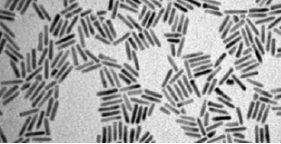
Hole transfer between a CdSe/CdS core/shell semiconductor nanorod and a surface-ligated alkyl ferrocene is investigated by a combination of ab initio quantum chemistry calculations and electrochemical and time-resolved photoluminescence measurements. The calculated driving force for hole transfer corresponds well with electrochemical measurements of nanorods partially ligated by 6-ferrocenylhexanethiolate. The calculations and the experiments suggest that single step hole transfer from the valence band to ferrocene is in the Marcus inverted region. Additionally, time-resolved photoluminescence data suggest that two-step hole transfer to ferrocene mediated by a deep trap state is unlikely. However, the calculations also suggest that shallow surface states of the CdS shell could play a significant role in mediating hole transfer as long as their energies are close enough to the nanorod highest occupied molecular orbital energy. Regardless of the detailed mechanism of hole transfer, our results suggest that holes may be extracted more efficiently from well-passivated nanocrystals by reducing the energetic driving force for hole transfer, thus minimizing energetic losses.
Copyright © 2014 American Chemical Society.