 Advances in Engineering Advances in Engineering features breaking research judged by Advances in Engineering advisory team to be of key importance in the Engineering field. Papers are selected from over 10,000 published each week from most peer reviewed journals.

Advanced Materials, April 2014, DOI: 10.1002/adma.201400420.
Jonathan Reeder, Martin Kaltenbrunner, Taylor Ware, David Arreaga-Salas, Adrian Avendano-Bolivar, Tomoyuki Yokota, Yusuke Inoue, Masaki Sekino, Walter Voit, Tsuyoshi Sekitani and Takao SomeyaElectrical and Electronic Engineering and Information Systems, The University of Tokyo, Bunkyo-ku, Tokyo, Japan &
Department of Materials Science and Engineering, The University of Texas at Dallas, Richardson, Texas, USA &
Exploratory Research for Advanced Technology (ERATO), Japan Science and Technology Agency (JST), Bunkyo-ku, Tokyo, Japan.
Abstract
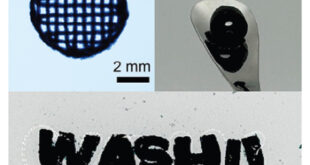
A unique form of adaptive electronics is demonstrated, which change their mechanical properties from rigid and planar to soft and compliant, in order to enable soft and conformal wrapping around 3D objects, including biological tissue. These devices feature excellent mechanical robustness and maintain initial electrical properties even after changing shape and stiffness.