Advances in Engineering Advances in Engineering features breaking research judged by Advances in Engineering advisory team to be of key importance in the Engineering field. Papers are selected from over 10,000 published each week from most peer reviewed journals.

Applied Surface Science, Volume 273, 2013, Pages 806-815.
Amit Banerjee, Debajyoti Das.
Nano-Science Group, Energy Research Unit, Indian Association for the Cultivation of Science, Jadavpur, Kolkata 700 032, India.
Abstract
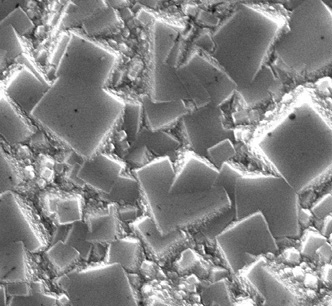
Various process conditions are summarized that allocate different carbon nanostructures (spherical nano-diamonds, nano-plates, nano-rods, a-C wrinkles, etc.) grown at low temperature, by micro-wave plasma enhanced CVD (MW-PECVD) of CH4/H2 mixture. At an optimized MW power of 500 W, gas pressure of 30 Torr and at only 200 °C temperature, spherical shaped homogeneously distributed nano-structures of average size ~120 nm, embedded within a matrix made of fine-grain nanocrystallites were produced. The spherical structures were found to increase in number density with elevation of temperature. With pretreatment of the substrate by mechanical scratching nano-plate and nano-rod like structures could also be grown. Further, amorphous carbon wrinkles were formed by controlling the flow rate of the precursors. The bulk material was found to improve in crystallinity with the increment of pressure and highly polycrystalline nano-diamonds (1 1 1), along with graphitic [(1 0 0), (0 0 4)] inclusions, with an average size of 13 nm and number density ~8 × 108 cm−2 were grown at 70 Torr, at a low substrate temperature of 250 °C. In view of basic understanding of the structure and the growth mechanism of these various nano-structures of carbon a detailed study was performed using Micro-Raman, FE-SEM and HR-TEM characterizations.