Advances in Engineering Advances in Engineering features breaking research judged by Advances in Engineering advisory team to be of key importance in the Engineering field. Papers are selected from over 10,000 published each week from most peer reviewed journals.

Journal of Materials Science, January 2015, Volume 50, Issue 1, pp 439-446.
Ma. Mercedes Salazar-Hernández, Carmen Salazar-Hernández, Enrique Elorza-Rodríguez, Higinio Juárez Ríos.
- Departamento de Ingeniería en Minas, Metalurgia y Geología, Universidad de Guanajuato, Ex-Hacienda San Matías S/N, 36000, Guanajuato, Mexico and
- Unidad Profesional Interdisciplinaria de Ingenierías Campus Guanajuato, Instituto Politécnico Nacional, 36275, Silao de la Victoria Gto, Mexico
Abstract
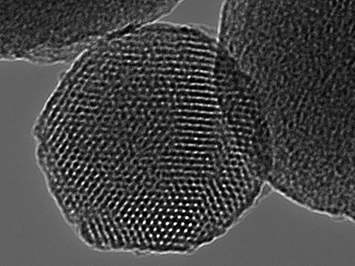
This research proposed the use of a mesoporous silica material (SiO2) as a Cu(I) adsorbent in a pre-treatment of cyanide effluents employed in gold and silver extraction. Two copper sources were employed: a [Cu(CN) X ]−(X+1) standard solution, and a cyanide solution obtained from an ore of Peña de Bernal, Chihuahua, México, which was named Cu(I)–CN–PB. Mesoporous silica removes around 90 % of the Cu(I)–CN at 30 min in Cu(I)–CN solutions with 50 ppm of the metals; while, in a solution with a high concentration of copper (311 ppm), around 52 % was removed. The adsorption dates were adjusted following the Langmuir model; obtained a maximum adsorption capacity (Q 0) of 8.01 mg g−1 and a separation factor (R L) lower than one, which indicates a favorable thermodynamic adsorption process of Cu(I)–CN by SiO2. However, a similar copper removal capability and low selectivity was observed when Cu(I)–CN–PB was employed as the copper source. Therefore, a modification on the silica’s surface with phenyl groups was performed, in order to enhance the metallic ion selectivity. IR spectroscopy and TGA/DTA analysis confirmed the coupling of organic groups; on the other hand, nitrogen adsorption indicated a decrease on the BET surface area of the silica at 76 %, a modification of the silica structure was observed with the formation of two pore diameter (3.6 and 5.37 nm); 13C CP-MAS NMR indicated two different chemical shifts that corresponded to the phenyl groups on the two different pores observed. Phenyl groups enhance the selectivity for copper in the cyanide effluent, increasing the removal to 99 %.
Go To Journal of Materials Science