Advances in Engineering Advances in Engineering features breaking research judged by Advances in Engineering advisory team to be of key importance in the Engineering field. Papers are selected from over 10,000 published each week from most peer reviewed journals.

Aiman Eid Al-Rawajfeh
Journal of Industrial and Engineering Chemistry, Volume 16, Issue 6, November 2010
Abstract
The purpose of this work is to model the CaCO3–CO2–H2O system in falling film on a bank of horizontal tubes. The model was applied on a 5-effects reference thermal vapor compression multiple-effect distiller (MED-TVC) operating at top brine temperatures (TBT) of 60–70 °C. The model can predict pH values, CaCO3 deposition and fouling resistance with greater accuracy. Through the MED stages, the HCO3− and CO2 concentrations slightly increased while the CO32− concentration slightly decreased. The pH decreased from 8.8 in the first stage to 8.4 in the 5th stage. The CO2 release rates as well as the CaCO3 deposition rates increase with increasing top brine temperature (TBT). CO2 release rates decrease from 36.4 g/t feed water in the first stage to 32.5 g/t in the last stage. The specific CaCO3 deposition decreases from 127.3 g/t feed water in the first stage to 100.1 g/t in the last stage.
Additional Information:
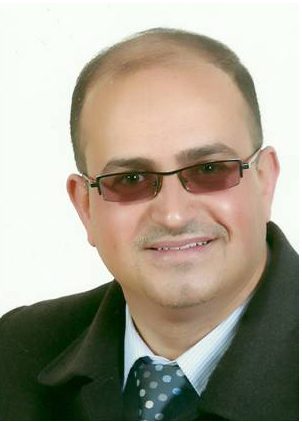
D.-Ing. Aiman E. Al-Rawajfeh is an associate professor of chemical engineering and Director of the Energy & Oil Shale Research Center (EOSRC) at Tafila Technical University, Jordan. He received his PhD in Thermal Process Technology from Martin-Luther University of Halle-Wittenberg, Germany, in 2004. He worked as a senior researcher at Doosan Water R&D Center, Dubai, UAE from 2008-2009. He has co-authored 35 refereed journal publications and similar number of conferences, besides contributing chapters to a number of books. He serves as an Associate Editor of Recent Patents on Chemical Engineering and a member of the editorial board of Membrane Water Treatment and Arab Water World. His efforts in research have been recognized with the 2009 Scopus Award and 2003-2004 EDS Conferences Students Awards. His research interests include thermal desalination, scaling and its inhibition, corrosion and its inhibition, new desalination processes, pretreatment and environmental research.
Go to Journal