Advances in Engineering Advances in Engineering features breaking research judged by Advances in Engineering advisory team to be of key importance in the Engineering field. Papers are selected from over 10,000 published each week from most peer reviewed journals.

Significance Statement
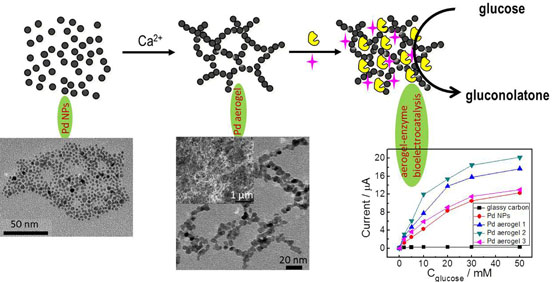
The morphology and size control of the nano-sized materials arouse broad interests and remain challenges nowadays. Researchers in TU Dresden, Germany reported a facile method to control the growth of metal aerogels. By using calcium ions as the efficient destabilizing agent, Pd aerogels with different porosities and surface areas were simply produced via tuning the concentration of destabilizer. These Pd aerogels are expected to provide a matrix with high electrical conductivity and high surface area for bioelectronic applications. They may also offer inherent catalytic activity and generally fast (reversible) electron-transfer kinetics. In this respect, glucose oxidase (GOD) was immobilized in the Pd aerogels, which exhibited faster electrode kinetics and higher activities towards the ferrocene-mediated oxidation of glucose, since the enzyme-loaded metallic aerogels in combination with their meso/macroporous structure can facilitate electron and mass transfer processes. Such results would promise potential applications of the high-performance glucose biosensors and glucose/O2 biofuel cells.
J Am Chem Soc. 2014 ;136(7):2727-30.
Wen D, Herrmann AK, Borchardt L, Simon F, Liu W, Kaskel S, Eychmüller A.
Physical Chemistry, TU Dresden , Bergstrasse 66b, 01062 Dresden, Germany.
Abstract
We report the controllable synthesis of Pd aerogels with high surface area and porosity by destabilizing colloidal solutions of Pd nanoparticles with variable concentrations of calcium ions. Enzyme electrodes based on Pd aerogels co-immobilized with glucose oxidase show high activity toward glucose oxidation and are promising materials for applications in bioelectronics.