 Advances in Engineering Advances in Engineering features breaking research judged by Advances in Engineering advisory team to be of key importance in the Engineering field. Papers are selected from over 10,000 published each week from most peer reviewed journals.

Antonio Zuorro, Marcello Fidaleo, Roberto Lavecchia
Enzyme and Microbial Technology, Volume 49, Issues 6–7, December 2011
Abstract
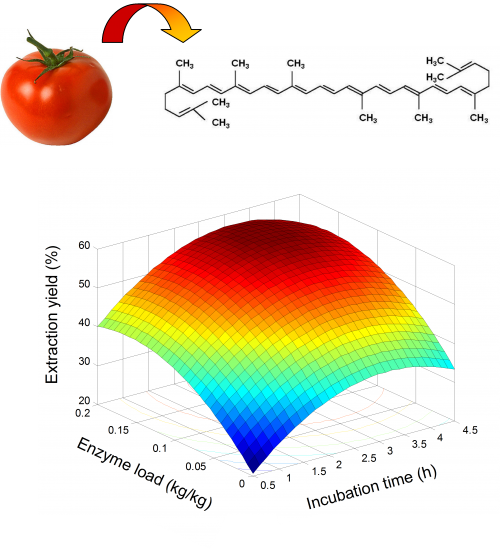
A central composite design was used to optimize the enzyme-assisted extraction of lycopene from the peel fraction of tomato processing waste. Tomato skins were pretreated by a food-grade enzyme preparation with pectinolytic and cellulolytic activities and then subjected to hexane extraction. The factors investigated included extraction temperature (10–50 °C), pretreatment time (0.5–6.5 h), extraction time (0.5–4.5 h), enzyme solution-to-solid ratio (10–50 dm3/kg) and enzyme load (0–0.2 kg/kg). Overall, an 8- to 18-fold increase in lycopene recovery was observed compared to the untreated plant material. From a response surface analysis of the data, a second-degree polynomial equation was developed which provided the following optimal extraction conditions: T = 30 °C, extraction time = 3.18 h and enzyme load = 0.16 kg/kg. The obtained results strongly support the idea of using cell-wall degrading enzymes as an effective means for recovering lycopene from tomato waste.
Go to Journal
