Advances in Engineering Advances in Engineering features breaking research judged by Advances in Engineering advisory team to be of key importance in the Engineering field. Papers are selected from over 10,000 published each week from most peer reviewed journals.

Dyes and Pigments, Volume 96, Issue 3, March 2013, Pages 626-635.
Noelia C. López Zeballos, Julieta Marino, María C. García Vior, Nicolás Chiarante, Leonor P. Roguin, Josefina Awruch, Lelia E. Dicelio.
INQUIMAE, Departamento de Química Inorgánica, Analítica y Química Física, Facultad de Ciencias Exactas y Naturales, Universidad de Buenos Aires, Ciudad Universitaria, Pabellón II, 1428 Buenos Aires, Argentina and
Instituto de Química y Fisicoquímica Biológicas (UBA-CONICET), Facultad de Farmacia y Bioquímica, Junín 956, 1113 Buenos Aires, Argentina and
Departamento de Química Orgánica, Facultad de Farmacia y Bioquímica, Universidad de Buenos Aires, Junín 956, 1113 Buenos Aires, Argentina.
Abstract
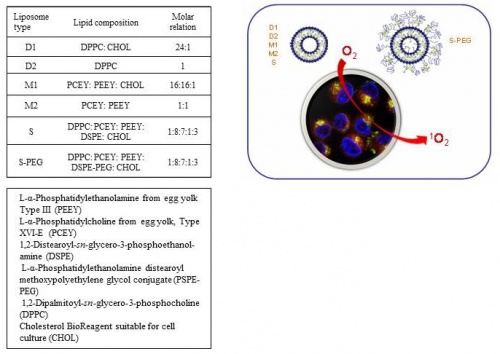
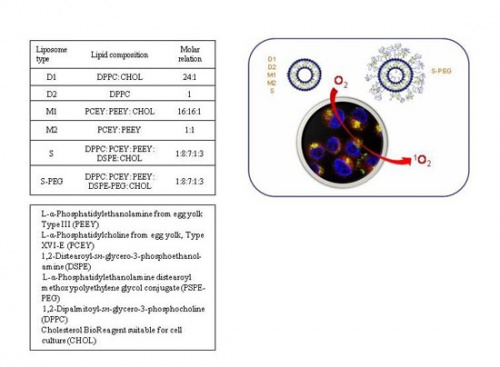
Six novel liposomal formulations of 2,9(10),16(17),23(24)-tetrakis[(2-dimethylamino)ethylsulfanyl]phthalocyaninatozinc(II) (Pc9) were investigated to establish how the environments affect their photophysical and photobiological properties. The incorporation efficiency and solubility during a time period were evaluated. All Pc9-liposomal formulations were efficient singlet oxygen quantum yield generators. The photobiological potentials were evaluated on human nasopharynx KB carcinoma cells. None of the formulations studied showed cytotoxic effects in the absence of light, whereas all of them showed good performance after irradiation. The 50% inhibition of cell proliferation (IC50) was in the range of 0.21–0.47 uM for Pc9-loaded liposome formulations. A lysosomal localization was found for S-PEG as well as for S.